How We Built a Full-Stack AI Marketplace Platform for the Film Industry (SetSwap Case Study)
How We Built a Full-Stack AI Marketplace Platform for the Film Industry (SetSwap Case Study)
The film and television industry generates an enormous amount of physical waste. Sets get struck. Props get boxed. Wardrobe gets written off. For most productions, the default answer to "what do we do with this?" is liquidation, storage, or landfill.
Nobody had built the infrastructure to change that. Not because the problem wasn't obvious, but because building for this industry means understanding its language, its time pressure, and its relationships. A generic marketplace doesn't work here. A custom one does.
SetSwap founder Matthew John came to us with a clear problem statement: production managers, art directors, and set decorators need a purpose-built platform to buy, sell, rent, and rehome production assets. Fast. Under pressure. With sustainability reporting baked in.
This post documents exactly how we built it, what decisions we made, and why that process produces something that holds in production.
The Problem We Were Solving
What the film industry actually does with assets when production wraps
When a production ends, the clock starts immediately. Assets need to move. The options available until now were blunt: liquidators who pay pennies, storage facilities that accumulate cost, or disposal. None of these create value for the next production that needs exactly what the last one just got rid of.
The circular economy concept is well understood in manufacturing and retail. In film and TV production, it had no real infrastructure. The relationships existed. The willingness to reuse existed. The platform to make it frictionless did not.
Why generic marketplace software doesn't work here
Film productions don't operate like retail buyers. A production manager searching for a 1970s kitchen set doesn't have time to browse item by item. They need a sourcing package. They're working against a shooting schedule. They need to know if an asset is available for the exact dates they're in production, what shipping looks like with their corporate carrier rates, and whether the studio on the other end has done this before.
Generic marketplace software handles none of that. It handles listings and payments. SetSwap needed to handle an industry.
How We Built the Marketplace Core
Stack decisions and why
SetSwap runs on React, Supabase, and Vercel, with Stripe handling payments. That stack isn't accidental. It's the result of a specific calculation: what gives us the fastest path to a production-ready platform without introducing architecture debt that breaks when the user base grows.
Supabase handles auth, database, and real-time subscriptions. Vercel handles deployment and edge performance. React gives us the component flexibility to build a design system that works across marketplace, rental, and admin flows without redundancy. Stripe handles not just payments but the more complex flows: security deposit holding, scheduled payouts, refund operations.
The stack decision happened in week one. That's when it matters. Every time we've deferred architecture conversations, the project costs twice the time and half the value.
What the checkout and donation flow required
The marketplace supports standard purchases, rentals, and a donation claim flow. That last one sounds simple. It isn't. A donation in this context means a production passing assets to another team at no cost, with a structured handoff, notifications on both sides, and an admin trail. It's not a discount. It's a different transaction type with different logic.
Building it correctly meant resisting the temptation to hack it onto the purchase flow. We gave it its own logic, its own state, its own confirmation sequence. That decision adds days in the short term. It removes weeks of rework in production.
Pod structure in action
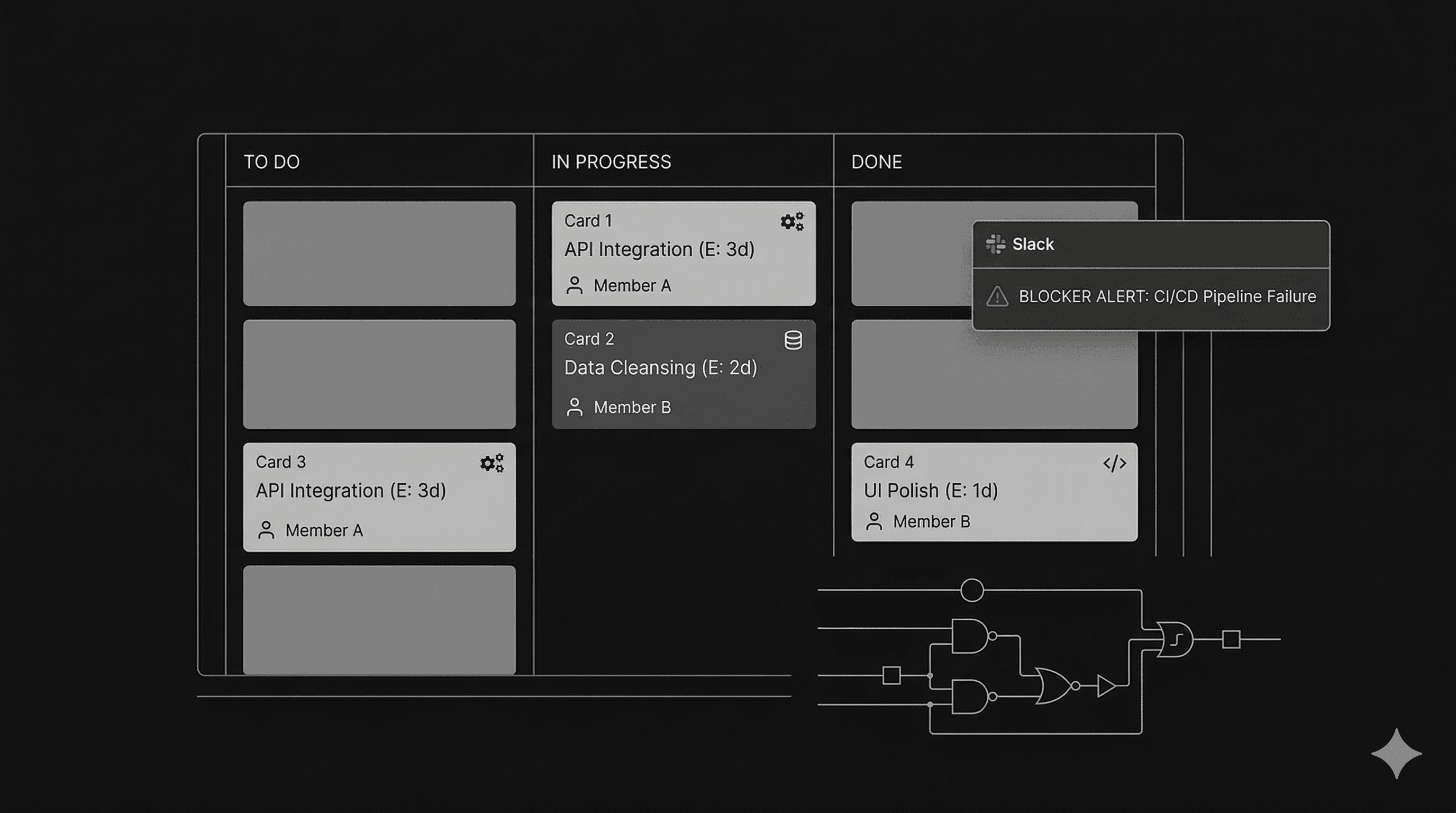
Every IMS build runs in a structured pod: two engineers, a project manager, and a designer, led by a senior engineer who sets the technical standard from day one. On SetSwap, that structure determined how features were sequenced, how the design system scaled across modules, and how we maintained quality across a platform that touches payments, AI, logistics, and admin simultaneously.
The pod structure isn't a staffing model. It's a quality model. The senior engineer owns the architecture. The PM owns the client relationship. The designer owns the system coherence. Nobody is context-switching across all three.
The AI Concierge: Building Something That Doesn't Exist Yet
Why item-by-item search fails production managers
The core problem with any marketplace is discovery. On SetSwap, that problem is acute. A production designer building a period-accurate office set doesn't start with a product category. They start with a vision. Item-by-item search forces them to reverse-engineer that vision into individual queries. That's not how they work. It's not how any creative professional works.
The AI Concierge is the solution to that problem. It's a chat-based sourcing tool that lets users describe what they need at the production level. A medical drama. A 1970s kitchen. A period-accurate newsroom. The concierge asks targeted follow-up questions and then surfaces listings and rental assets as a curated package.
How the concierge builds sourcing packages from a prompt
The key engineering decision here was what the concierge is actually doing under the hood. It's not keyword search dressed up in a chat interface. It's extracting intent from natural language, mapping that intent to asset categories and attributes in the database, and ranking results by relevance, availability, and proximity.
Packages can be shared via public link, downloaded as a PDF, or sent by email. That last part matters for how productions actually work. A production designer presents options to a director. They need to share something that looks like a proposal, not a link to a search results page.
What "production-ready AI feature" means in this context
Shipping an AI feature in a demo is different from shipping one that works under real user load, with real edge cases, across a database that's growing. Production-ready means the concierge handles vague prompts without breaking, returns useful results when inventory is sparse, and degrades gracefully when it doesn't know the answer.
That's a different engineering problem than making it work in a controlled environment. We see this pattern across every AI product we've shipped at Imaginary Space: the gap between demo and production is where most teams lose time. We've built the process to close that gap fast.
Rental Space, Booking, and the Complexity Nobody Talks About
Payment holding, security deposits, return confirmation
The RentalSpace module covers both physical spaces and individual assets available to rent. The booking flow sounds straightforward: select dates, confirm pricing, pay. In practice, it requires date availability logic, pricing rules, approval workflows, security deposit holding (money collected but not settled until return), and return confirmation before deposit release.
Each one of those steps is a decision point. Get the deposit logic wrong and you have a financial operations problem. Get the return confirmation wrong and you have a dispute resolution problem. We built each step as its own module with its own state management because that's what it takes to make something trustworthy at scale.
Idle assets as revenue
The RentalSpace module also enables studios to list their inventory for rent when it isn't in use. That's a business model shift. An asset that sits in a warehouse becomes a revenue line. For studios managing large inventories, that's meaningful. For the platform, it means deeper engagement from the supply side, which improves availability for buyers and renters.
That feature existed in the brief as a concept. Making it real required building studio inventory management, listing controls, and availability calendars that integrate with the booking flow. We built it as part of the core delivery, not as a phase two add-on, because the platform's value to studios depends on it.
Sustainability Reporting That's Actually Useful
Per-transaction impact, not just an aggregate number
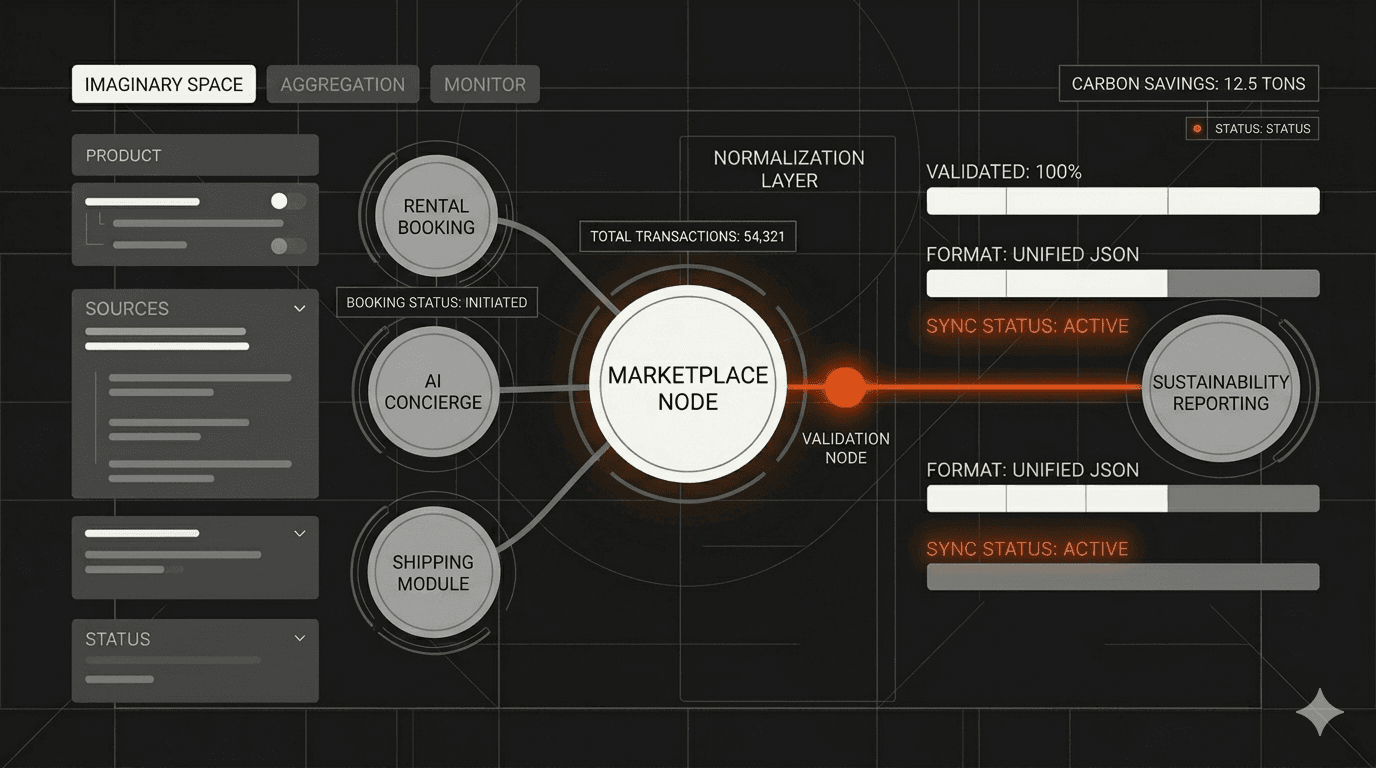
Every transaction on SetSwap generates an environmental impact report, powered by the Climatiq API. Carbon savings and waste diversion metrics are calculated per purchase and per rental, not just rolled up into an annual summary that nobody looks at.
That design decision matters because it changes behavior. When a production manager sees the carbon savings from a single sourcing decision, the sustainability case becomes tangible. It's not a corporate ESG metric. It's feedback that compounds across every decision the platform facilitates.
Gamified impact points
We built a gamified impact points system into the checkout experience. Users earn points for sustainable choices. Their cumulative impact is visible on their profile. That's not decoration. It's a retention mechanism that aligns user behavior with the platform's core mission.
The design principle behind it: sustainability should feel like something you earn, not something you comply with. That framing changes how users engage with the feature.
What Does It Take to Ship a Platform Like This?
How long does it take to build an AI marketplace platform?
It depends almost entirely on how well the problem is defined before the build starts. SetSwap is a complex platform. Marketplace, rentals, AI concierge, sustainability reporting, studio tools, shipping integrations, admin suite. That's a lot of surface area.
We delivered the full core feature set on schedule. That's a function of architecture decisions made in week one, not heroics in week eight. When you know what you're building and what you're explicitly not building yet, four weeks is achievable for a production-ready MVP. We've done it across 50+ products.
What's the hardest part of building an AI-powered marketplace?
The hardest part isn't the AI. It's the data model underneath it. An AI concierge that surfaces relevant results depends on listings that are structured consistently, tagged accurately, and updated in real time. Build the AI feature before you've built the data infrastructure and you've built something that demos well and works poorly.
We've seen this pattern across multiple AI marketplace builds, including MeasureAI, where the AI component's performance was directly tied to the quality of the data pipeline we built first. The sequence matters more than the technology.
How do you ensure quality at this speed?
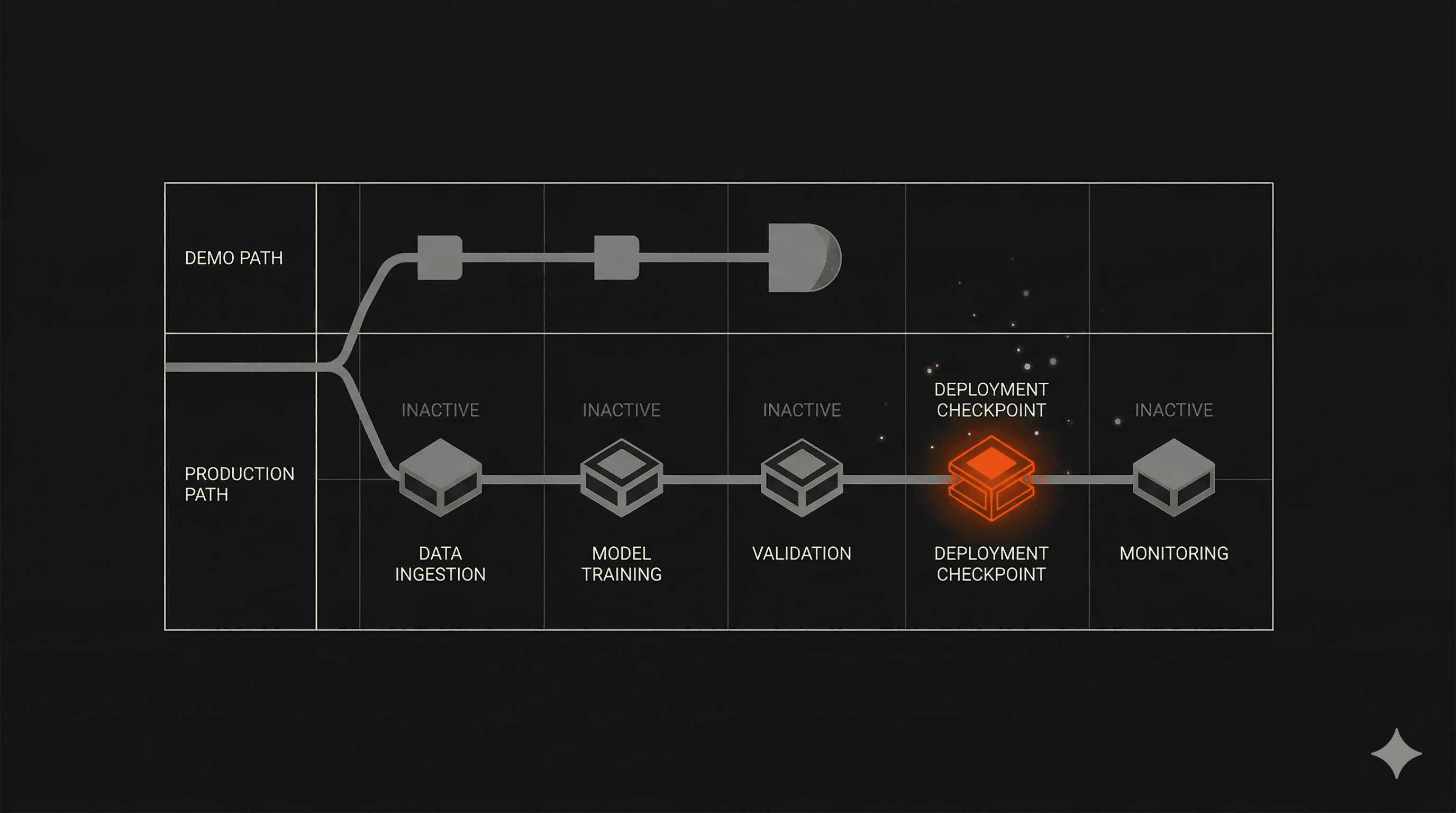
Two weeks before every delivery, we run a Bug Bash: we sit with the client and actively try to break the product before it reaches real users. Then pen testing on critical features. Then delivery.
That process is why we ship fast without shipping fragile. The Bug Bash isn't a QA checklist. It's adversarial testing with the client present. When the client is the one trying to break the product, two things happen: edge cases surface that no internal test would find, and the client builds confidence in what they're about to launch.
SetSwap launched on schedule with the full core feature set delivered. Phase 2 is already underway: shipping enhancements, AI concierge expansion, GreenPro/GreenShot sustainability integration, and a structured beta with curated studio stakeholders.
Building a marketplace platform that handles payments, AI, rentals, logistics, and sustainability reporting is not a small problem. The teams that do it well start with a clear problem statement, make architecture decisions early, and build with a process that catches failures before users do.
For a platform that started as a problem statement about film industry waste, SetSwap has become the operating system for the circular economy of film and TV production.
Imaginary Space is an AI-native product studio. We build production-ready AI products for VC-backed founders and enterprise teams, averaging a 4-week MVP delivery. If you're building a platform that needs to work from day one, let's talk.