From Aircraft Wings to Asteroid Mining: Why Imaginary Space Starts With AI

Shafeeq, a member of Imaginary Space co-authored a research paper on using space materials like shape memory polymers for commercial world applications like the aircraft wings. He ran finite element simulations on Boeing 777 and Airbus A380 high-lift devices to find a composite that wouldn't crack under takeoff loads. The winning combination is a glass fiber reinforced polymer with carbon fiber and graphene nano-filler deformed less, stressed less, and lasted longer than anything else his team tested.
That paper isn't a side note in his history. It's part of why Imaginary Space exists.
What shape memory polymers actually are:
Deform them. Heat them. They return to their original shape. Add carbon fiber and they get strong. Add graphene and they get stronger and more flexible. They're a hint at what materials can be when you stop thinking of them as static.
For aircraft wings, this means lighter structures that handle fatigue better. For space, it means something more interesting: structures that fold small for launch and deploy themselves in orbit. Components that self-heal in harsh environments. Habitats that adapt to whatever we throw at them.
This isn't science fiction. The Hong et al. study we cited in our paper was specifically about carbon fiber shape memory polymer composites for self-deployable structures in harsh space conditions. NASA and ESA have been working on this class of materials for over a decade. The materials science is already real.
The bottleneck for off-world resource extraction isn't the material. It's everything else.
Mining the Moon or asteroids isn't a materials problem first. It's a coordination problem. A logistics problem. A "how do you run thousands of autonomous decisions per second across distributed systems with light-speed delays" problem.
The path to space mining runs through software:

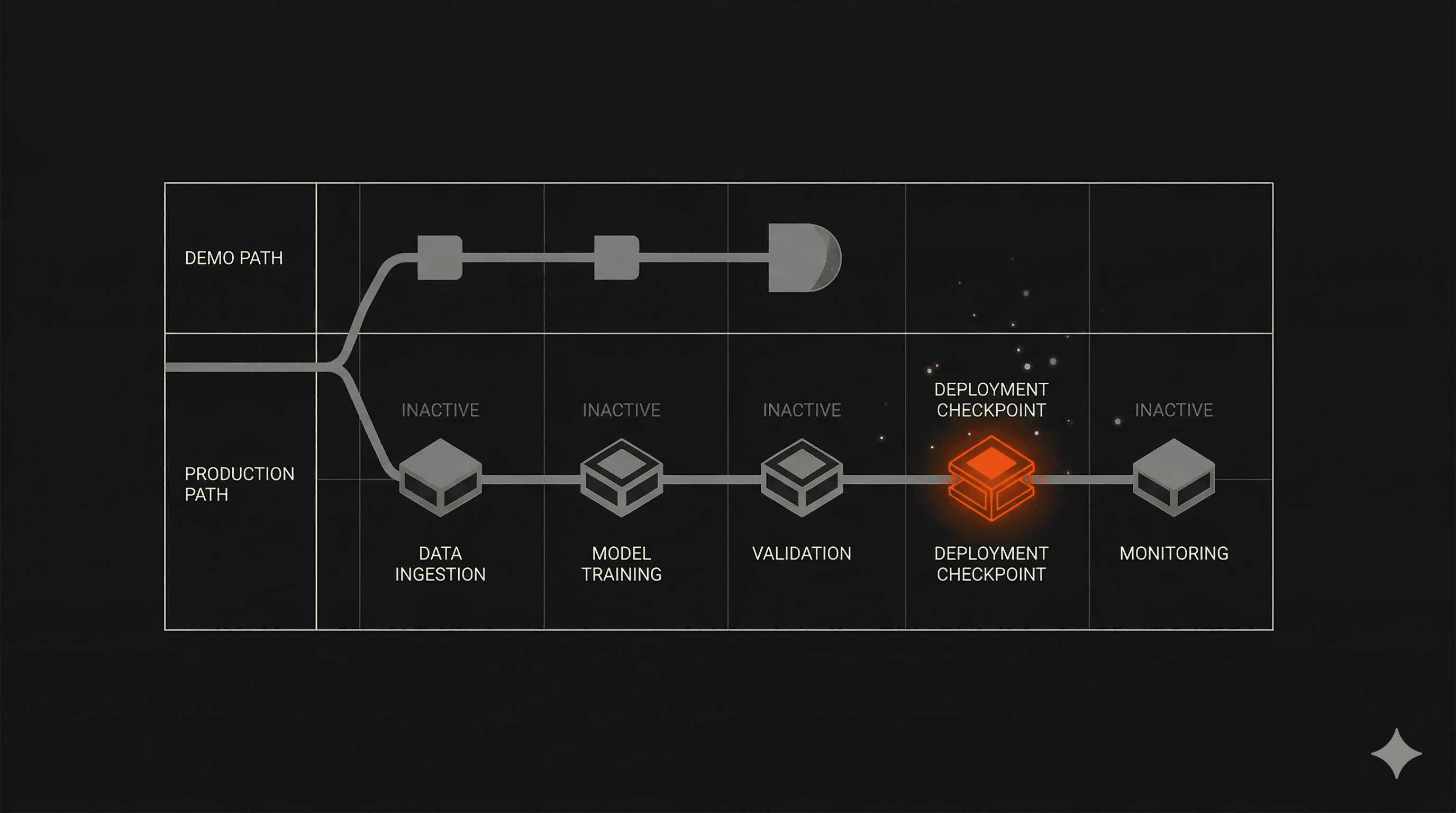
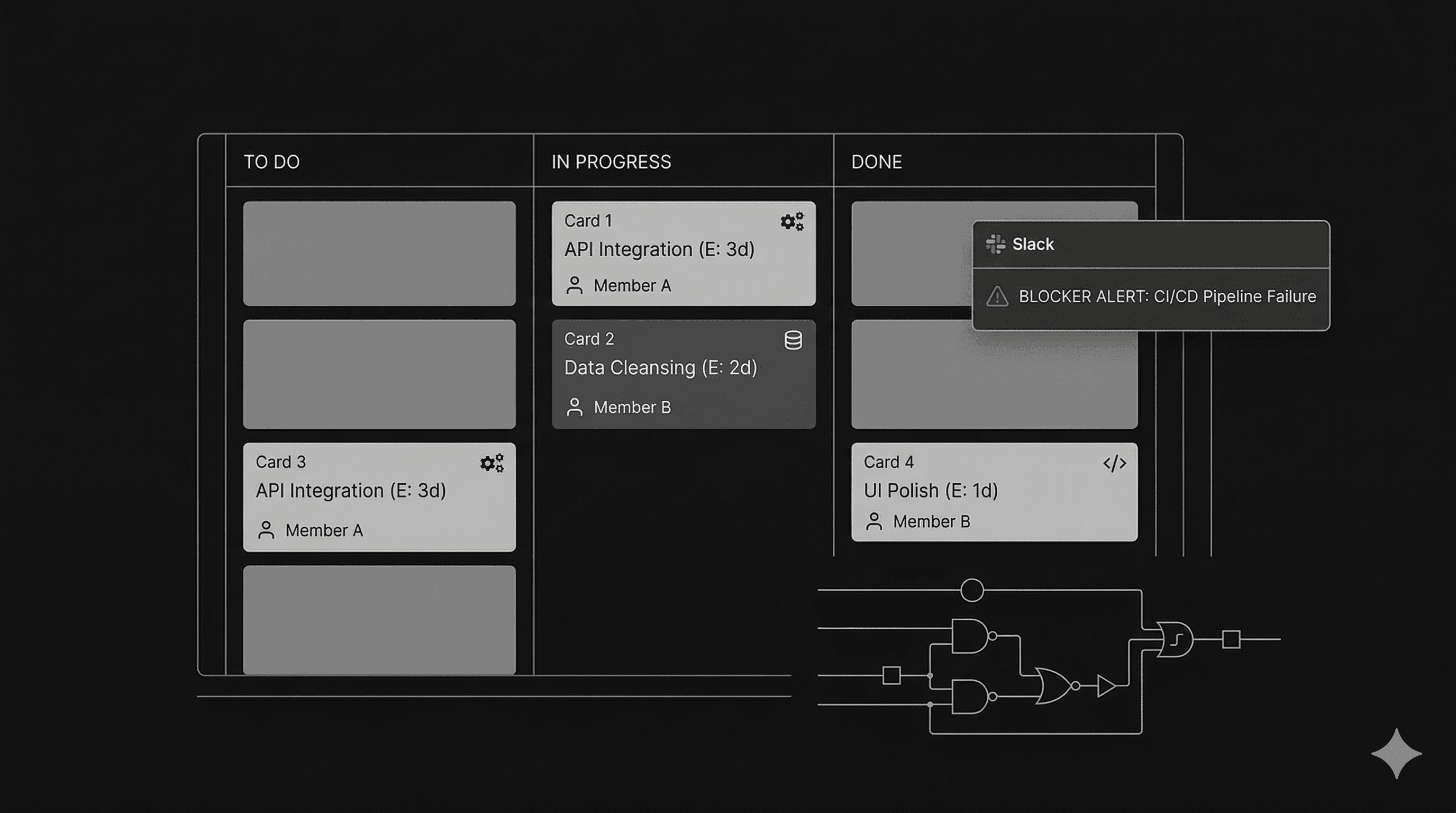
That's why Imaginary Space looks the way it does today. Right now we're building AI infrastructure — agents that handle complex workflows, platforms that coordinate distributed work, systems that turn unstructured input into reliable output. The same primitives that make AI agents work for enterprises today are the primitives that will run autonomous extraction operations in deep space tomorrow.
You can't go to space and figure out how to coordinate a hundred autonomous robots across a three-second light delay. You build that capability on Earth first, with customers and feedback loops that exist today, and you let it harden into something that can survive vacuum.
The bridge has three spans:
The first span is software. AI agents that plan, act, and recover from failure without human intervention. That's what we're shipping today.
The second is materials. Shape memory composites, self-assembling structures, and the manufacturing pipelines to produce them off-Earth. The research is mature. The capital and the will are catching up.
The third is operations. The actual coordination of robotic systems doing work in environments where humans can't easily reach. This is where the first two spans converge, and it's the hardest of the three. Not because the physics is unknown, but because the systems engineering is unforgiving. A bug on Earth costs a customer. A bug in the asteroid belt costs the mission.
When I look at the research paper now, I don't see academic research. I see one piece of a much larger picture...the materials piece. The work I'm doing on AI platforms today is another piece. The company we're building is designed to hold all three pieces together.
Why this matters:

People sometimes ask why a company called Imaginary Space spends most of its time building AI tools for businesses.
The honest answer: that's where the leverage is right now. The future of off-world resource extraction depends on autonomous systems that actually work. We're building the autonomous systems. The space part is downstream of getting that right.
The aircraft wing on a Boeing 777 doesn't look like an asteroid mining rig. But the materials that make both possible share the same lineage. The software that will coordinate both of them shares the same lineage. And the mindset of realizing that the constraints we accept today are not the constraints of physics, just of our current capability is the same.
That's the thread. That's why we're called Imaginary Space.
Sources:
-
Development of Innovative Shape Memory Polymers and their Nanocomposites to Resist the Load Aircraft High Lift Devices](https://papers.ssrn.com/sol3/papers.cfm?abstract_id=3708660), IJARET, Vol. 11, Issue 9